
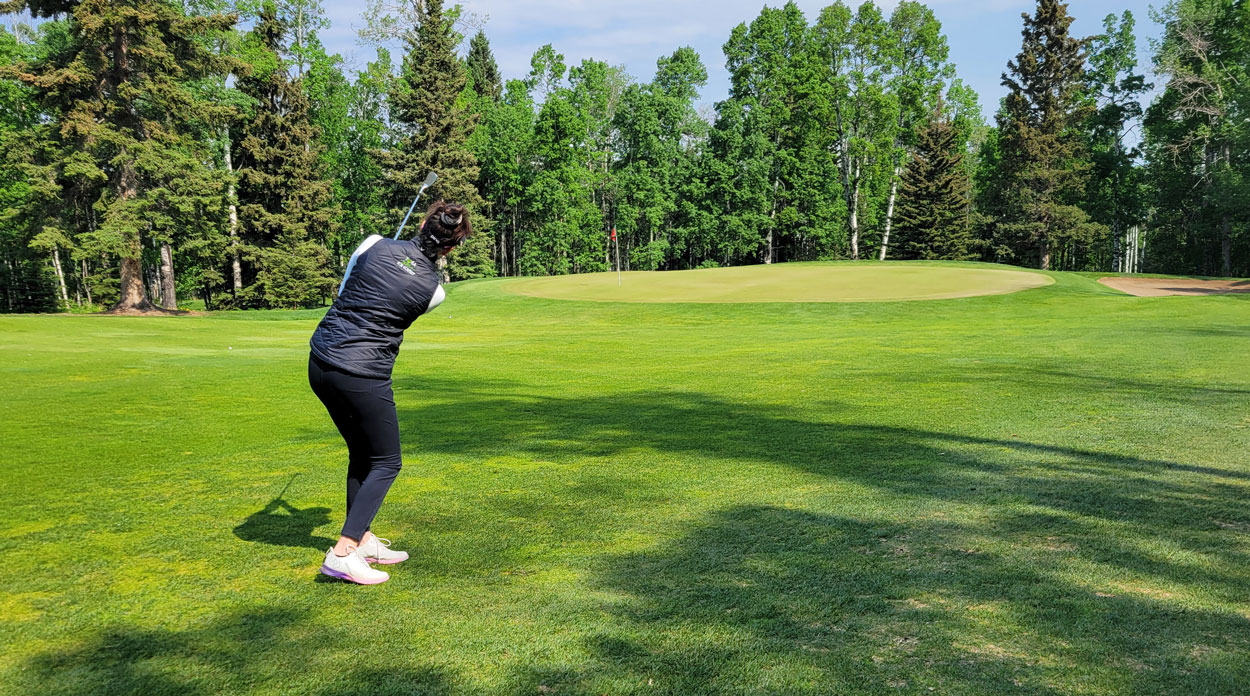
Golf is more than just swing mechanics, it’s how your body moves, supports itself, and recovers. The Titleist Performance Institute (TPI) talks about the Body-Swing Connection and how your physical capabilities (mobility, stability, strength, balance, and motor control) underpin your ability to execute a repeatable swing.
Yoga for Golfers® is a practical and effective way to enhance mobility, strength, and body awareness. In this article, we’ll explore three key ways Yoga for Golfers® supports the golf swing, with specific poses and exercises you can integrate into your training routine. These movements bridge the gap between mobility, core control, and pattern resistance, helping you move more efficiently and swing with less strain.
1) Restore Rotational Mobility and Separation
The Why
One of the major sources of power in the golf swing is the ability to rotate the upper body (shoulder turn) while the pelvis and hips delay. This creates hip-to-shoulder separation (sometimes called the X-Factor), enabling an elastic “stretch-shortening cycle” that increases clubhead speed.
In a recent video Dr. Greg Rose of TPI, talks about ‘distracting the joints‘ to enable greater shoulder turn. As we age, or spend long hours sitting, the hips and thoracic spine (upper and mid-back) often become stiff. TPI identifies the thoracic spine as a key “middle man” between the hips and shoulders; if it’s stiff, your body compensates via the lower back, losing power and increasing injury risk.
How Yoga Helps
These poses open the hips, mobilize the thoracic spine, and teach you to control rotation, exactly what you need to generate power safely and efficiently.
Low Lunge with Rotation
From a low lunge position (front knee over ankle, back leg extended), inhale to lengthen the spine. On the exhale, rotate your torso toward the front-leg side. Actively engage your shoulders by holding the shaft of a golf club at shoulder height as your rotate. Keep the pelvis anchored and stable.
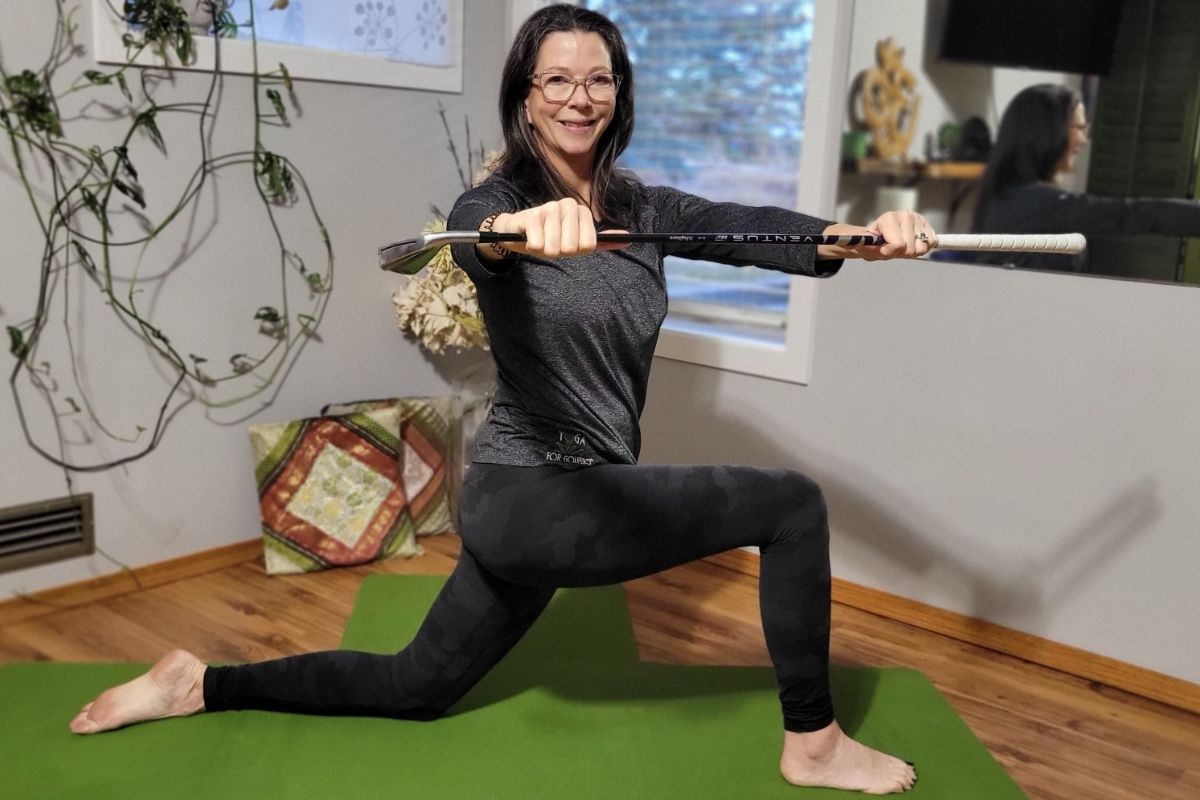
Cue for golfers: Think of initiating the torso turn rather than forcing it, just like your shoulders leading into the backswing while your hips stay grounded.
Thread the Needle (Spinal Rotation Variation)
Begin on all fours (tabletop). Slide one arm palm-up under the opposite arm and gently lower your shoulder and head toward the mat. From that “threaded” position, inhale to lengthen, exhale to rotate open, while reaching the top arm toward the top of the mat or behind you.
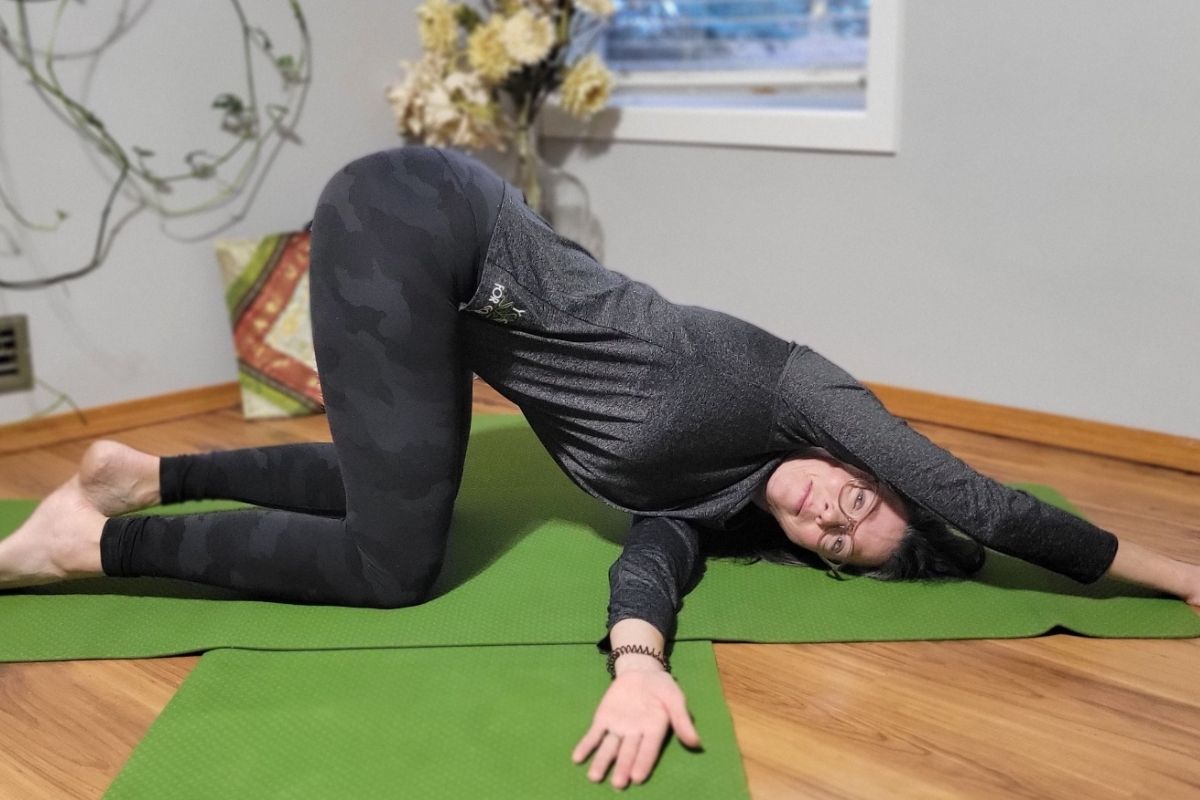
Cue for golfers: This move frees up the mid-back region (thoracic spine) so your shoulders can turn without dragging the hips. Like these upper body moves? Be sure to check out our full 60-minute class on YouTube, or read the blog here.
90-90 / Windshield Wipers
Sit on the floor with your knees bent and feet a little wider than hip width so that your hips and knees are both at roughly 90 degrees. Lean back slightly and place your hands on the floor behind you for support. Slowly drop both knees to one side, then bring them back through center and over to the other side, like windshield wipers. Move with control and let the pelvis rotate. This gently warms up the lower back and targets both internal and external rotation in the hips. Do 3–4 slow reps each side, then hold on the tighter side for a few steady breaths.
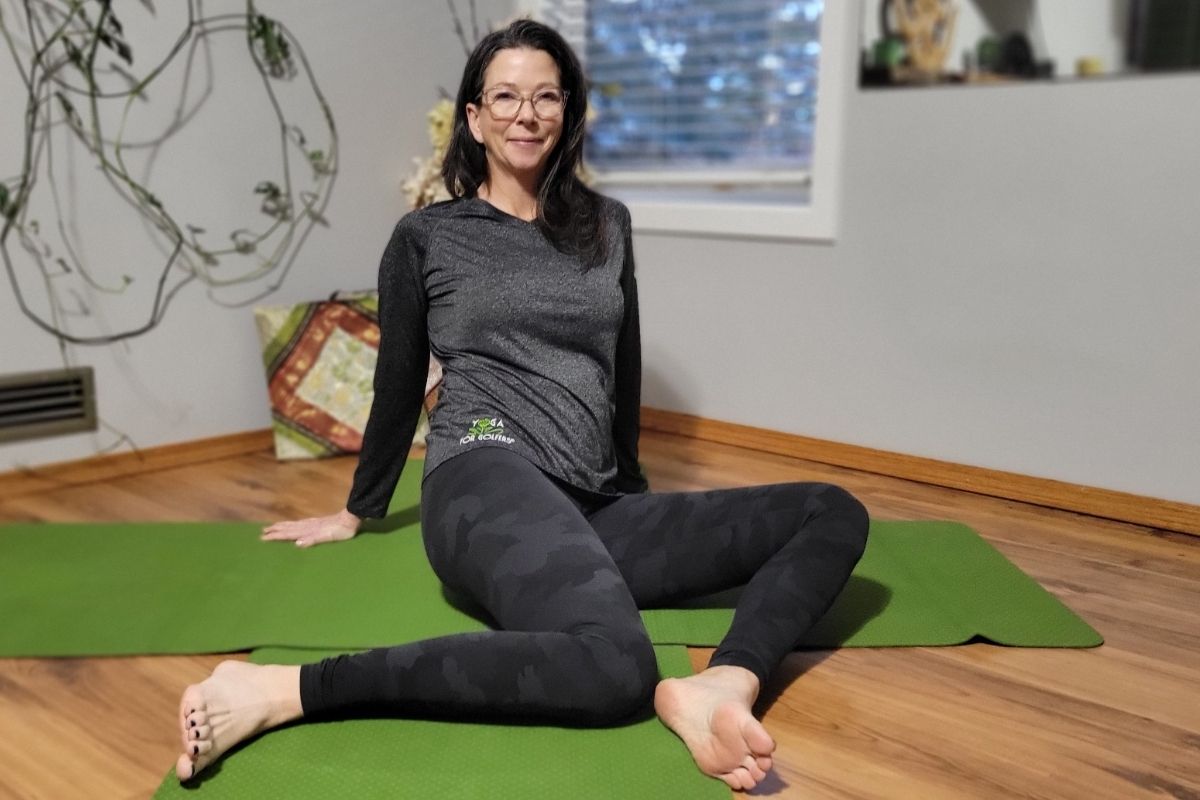
Cue for golfers: Use the long exhale as your “release.” You’ll find the rotation easier and more controlled when paired with slow, steady breathing.
Practice Tip: Try this short mobility sequence three to four times per week. The consistent, low-intensity work restores range of motion and reduces lower-back stress and are key ingredients for a more powerful and efficient swing. Charley Hoffman shared his hip warm-up routine with TPI recently, using this exact move.
2) Core Control and Stability using Yoga for Golfers®
The Why
Mobility without stability doesn’t translate into performance. You need to transfer that motion into the ground while maintaining posture to stabilize the spine and pelvis as the rotational forces build.
TPI emphasizes that balance and trunk control are essential for consistent ball striking and for preventing swing faults like swaying, sliding, or early arm extension. Single-leg stability and intra-abdominal pressure, the “canister” that protects your spine and allows efficient energy transfer. are fundamental for golfers of all ages.
How Yoga Helps
These yoga and Pilates-inspired movements train both balance and the canister system that stabilizes your midsection.
Bridge Pose
Lie on your back with your knees bent and feet hip-width apart. Inhale to prepare; exhale, press your feet into the floor and lift your hips toward the ceiling. Engage your glutes and core to form a straight line from shoulders to knees. Hold for 3-5 breaths, then slowly lower down.
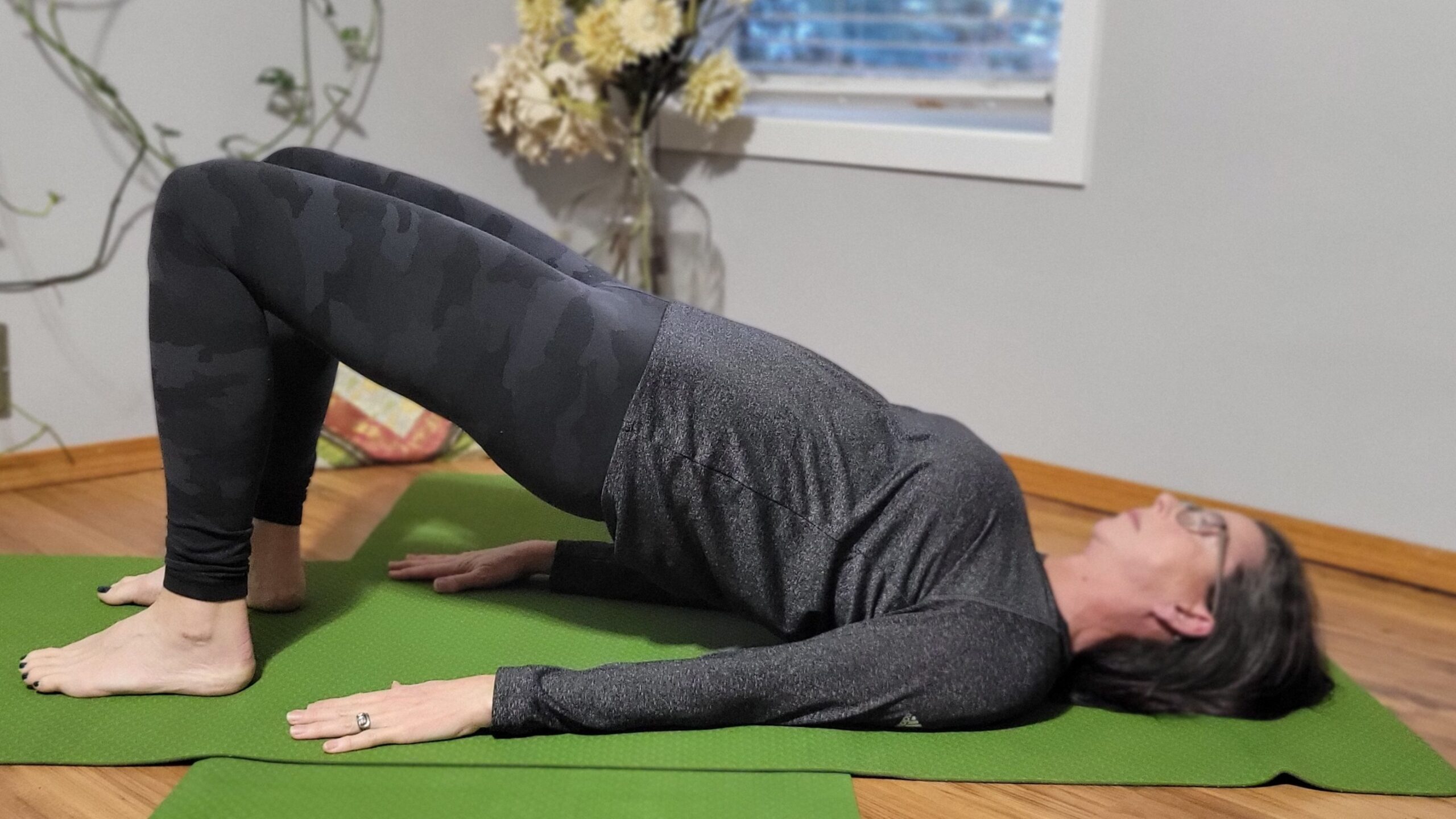
Cue for golfers: Bridge strengthens your posterior chain (glutes, hamstrings, and back extensors), helping maintain posture throughout the swing and through impact.
Warrior III with Blocks
From standing, place two blocks in front of you. Shift your weight to one leg, hinge forward from the hips, and lift your back leg until your body forms a “T” shape. Rest your hands lightly on the blocks for balance, keeping the pelvis level and the standing leg engaged. Hold 20–30 seconds each side.
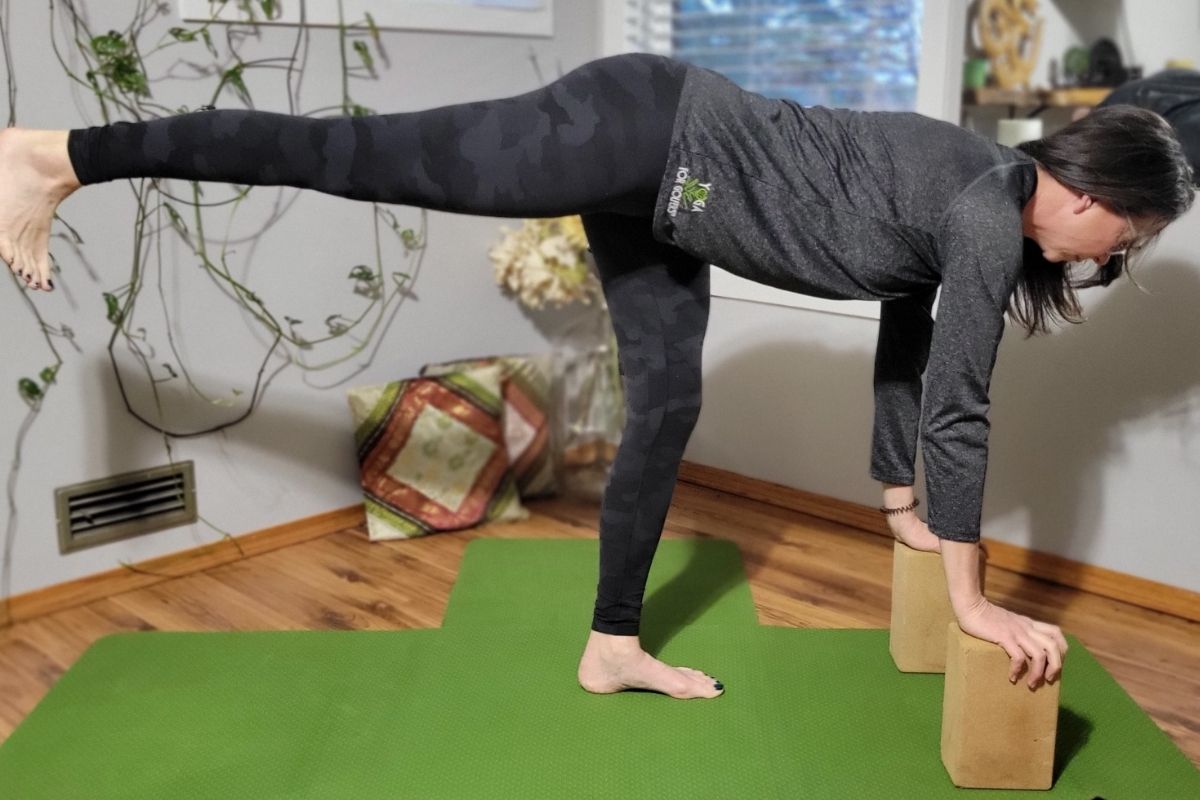
Cue for golfers: This pose challenges your single-leg stability, training your body to stay grounded and controlled as you rotate and shift weight during the swing.
Half Roll-Back with Rotation
Sit tall with knees bent and feet grounded. Roll back halfway, keeping length through the spine and the abdominals engaged. From this position, rotate the torso to one side, while holding the shaft of a golf club at shoulder height. Return to center, then roll up. Repeat on the opposite side for 5-10 reps per side.
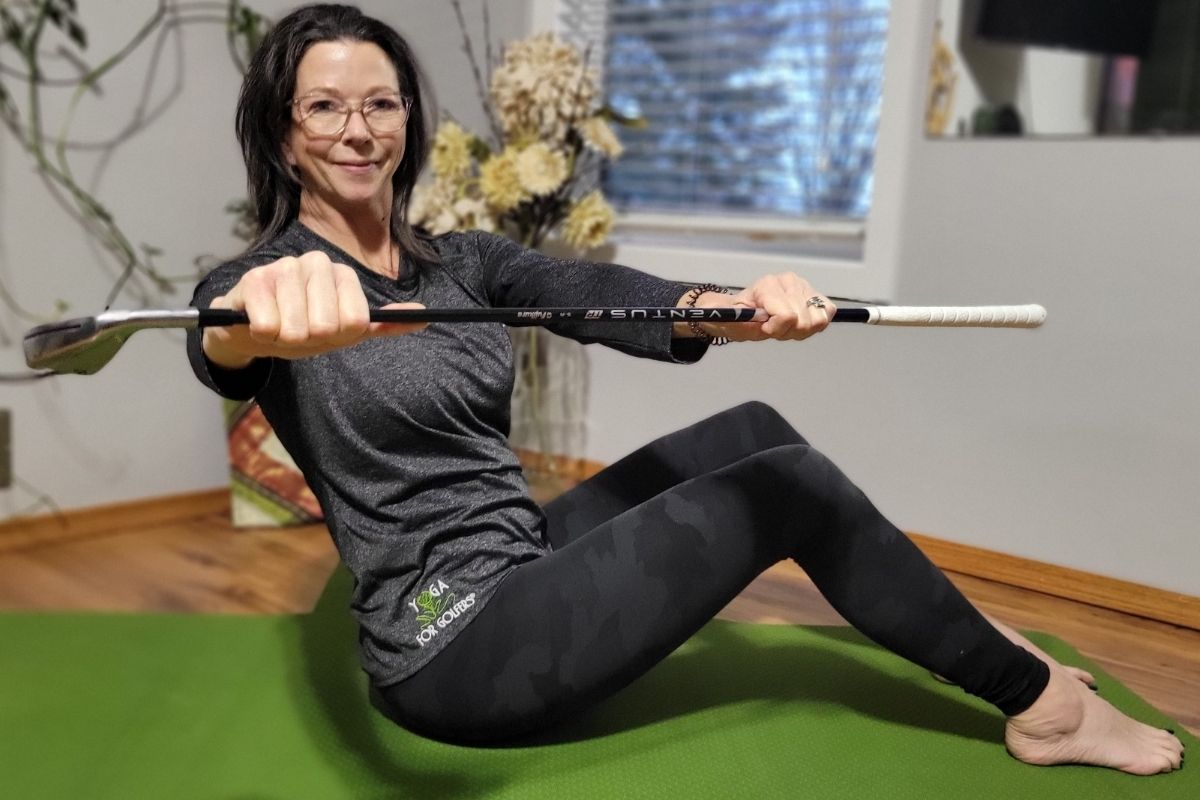
Cue for golfers: This Pilates-based move trains intra-abdominal pressure; your internal “canister” of strength. It helps prevent collapse or loss of posture during rotation, allowing your shoulders and hips to move in sync.
Practice Tip: Add this short stability sequence twice a week, or follow along in our 10-minute video before each practice session. Over time, you’ll notice improved balance, posture, and swing consistency.
3) Improve Posture, Recovery, and Motor Control
Golf is inherently repetitive – the same swing pattern practiced and performed thousands of times. Without addressing the physical demands behind that pattern, golfers often develop imbalances, asymmetries, and repetitive-strain issues in the back, hips, and shoulders. Improving thoracic rotation allows you to coil and uncoil efficiently without overloading the lower back, develop core control (your canister) supports posture and consistent sequencing, and build pattern resistance that helps you stabilize against rotational forces rather than collapsing into them. Together, these qualities not only improve how you swing, they help you stay healthy, avoid overuse injuries, and enjoy the game longer.
Bringing It All Together
Whether you’re a senior golfer looking to maintain distance, a woman balancing mobility and strength training, or a junior athlete building body awareness, yoga helps you move better, swing better, and play longer.
The physical benefits of improved rotational mobility, better stability and balance, and enhanced posture and recovery, will directly translate to more power, precision, and longevity in your game. That’s why Yoga for Golfers® is a powerful off-season and in-season strategy for improving swing mechanics and preventing injury
If you’re ready to experience how Yoga for Golfers® can improve your performance on and off the course, consider adding a short routine to your weekly schedule or join me on the mat in-person SLS Centre in Cochrane starting in March 2026 or online via our partner Swingfit.
Let’s make your body a better swing partner: more mobile, more stable, and more resilient.